
Silk Littlejohn: Empowering Through Adversity
Nonprofits, Community Organizations, Empowerment, Disability Inclusion
Silk Littlejohn: The Blind Diva Turning Adversity into Empowerment
Discover how Silk Littlejohn, widely known as “The Blind Diva,” transformed unimaginable trauma into a life of advocacy, creativity, and leadership—and what nonprofits and community organizations can learn from her approach to empowerment and inclusion.
Who Is Silk Littlejohn, the “Blind Diva”?
Silk Littlejohn—often introduced as Silk Littlejohn, The Blind Diva—is an empowerment speaker, visual impairment coach, and civil rights advocate whose work bridges beauty, disability rights, and community empowerment. For nonprofits and community organizations seeking authentic voices on resilience, equity, and inclusion, her story offers both inspiration and a practical roadmap for change.
Long before she became a nationally recognized Blind Diva, Silk was known in her community as a gifted cosmetologist and innovator in hair design. After surviving a violent attack that left her blind, she refused to be defined by her disability. Instead, she rebuilt her life, career, and purpose around a powerful mantra: “I Am Not My Blindness.” Today, she uses that mantra to help others reclaim their own identities beyond labels, diagnoses, or circumstances.
From Cosmetologist to Innovator: The Roots of the Blind Diva
Silk Littlejohn’s journey begins in the beauty industry. As a trained cosmetologist, she built her reputation one client at a time, listening closely to the stories women shared in her chair. The salon became a safe space—a place where style, self-esteem, and sisterhood came together. For many of her clients, Silk was more than a stylist; she was a confidante, a coach, and a quiet force of encouragement long before she ever stepped onto a stage as an empowerment speaker.
In this environment, she developed an intuitive understanding of how appearance, identity, and confidence intersect. She saw how a fresh hairstyle could shift posture, eye contact, and even the way a woman spoke about her life. Those early lessons in the salon chair shaped the philosophy that now underpins her work with nonprofits and community organizations: when people feel seen, valued, and beautiful in their own skin, they are more likely to believe they deserve opportunity and justice.
The Spider Weave: Innovation as a Form of Empowerment
Among Silk’s most notable contributions to the beauty industry is her innovative hair weaving technique called the “Spider Weave.” Designed to create secure, natural-looking styles, the Spider Weave reflects her creativity and her commitment to helping women feel confident regardless of hair loss, thinning, or other challenges often wrapped in stigma and shame.
The Spider Weave is more than a technical method; it is a metaphor for Silk’s life and work. Like a web, it is carefully constructed, resilient, and supportive. For clients experiencing medical hair loss, domestic violence, or economic hardship, this technique became a lifeline to dignity. For community organizations, it offers a tangible example of how culturally relevant services—whether in beauty, wellness, or vocational training—can restore a sense of wholeness and possibility to those who have been marginalized.
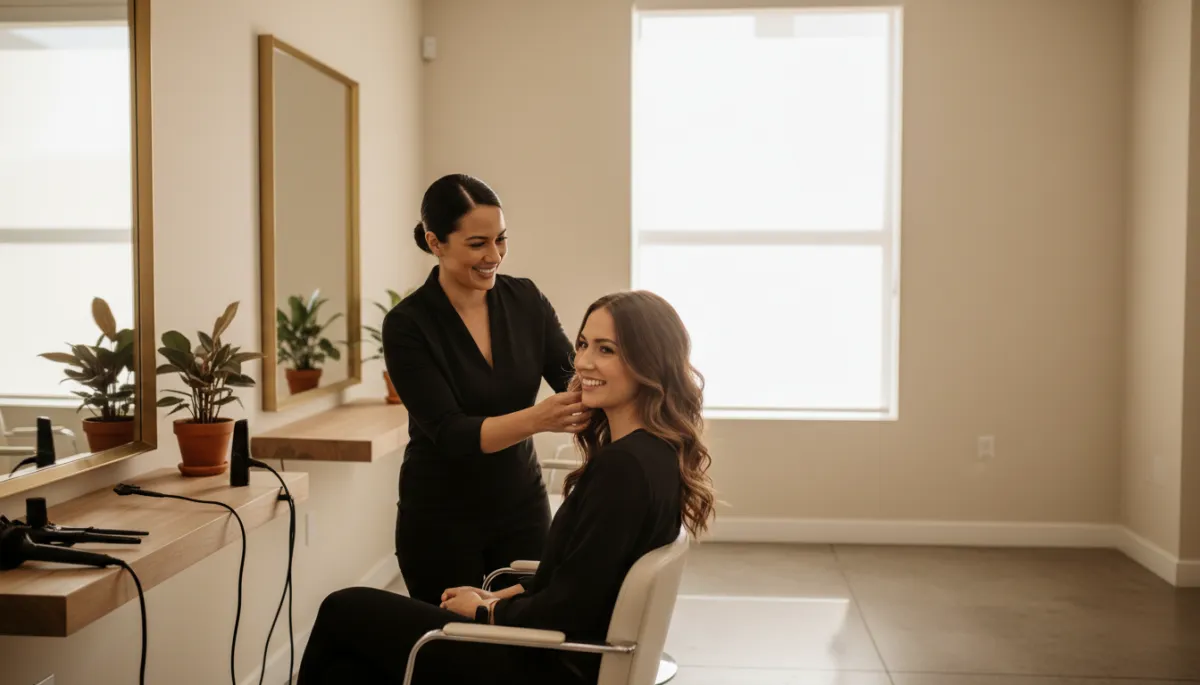
Beauty services become a gateway to confidence, community, and deeper healing.
Surviving Violence and Losing Sight: A Turning Point, Not an Ending
Silk’s life took a devastating turn when she was the victim of a violent attack that resulted in the loss of her sight. Overnight, the woman who had built a career on visual artistry, precision, and aesthetics was forced to navigate a world that suddenly felt unfamiliar and unsafe. The trauma was not only physical; it was emotional, economic, and social. She faced fear, grief, and the crushing question that many survivors of sudden disability ask: “Who am I now?”
For many, this might have marked the end of a career and a shrinking of dreams. For Silk Littlejohn, it became a turning point. She refused to disappear into the margins. Instead, she began the hard, daily work of relearning life as a blind woman—from navigating streets and public transit to reimagining how she could still create, serve, and lead. This period of rebuilding laid the foundation for her future as an empowerment speaker, visual impairment coach, and civil rights advocate.
“I Am Not My Blindness”: A Mantra for Identity and Dignity
Out of this season of loss and rediscovery came Silk’s signature mantra: “I Am Not My Blindness.” This statement is not a denial of disability; it is a declaration of identity. It reminds audiences that blindness may shape her experience, but it does not limit her intellect, ambition, or humanity. For people living with disabilities—and for the organizations that serve them—this mantra is a powerful framework for program design and community engagement.
When Silk steps onto a stage or into a classroom, she invites others to fill in the blank for themselves: “I am not my ______.” Not my trauma. Not my diagnosis. Not my poverty. Not my past. Nonprofits and community organizations can draw on this language to help participants reframe how they see themselves—moving from deficit-based labels to strengths-based identities that honor resilience, creativity, and leadership potential.
💡 Program Insight for Nonprofits: Consider integrating “I Am Not My Blindness”–style affirmations into workshops or support groups, inviting participants to name what they are more than. This simple practice can shift conversations from limitation to possibility.
Silk Littlejohn as an Empowerment Speaker: Storytelling that Moves People to Action
As an empowerment speaker, Silk Littlejohn brings her full story to the microphone: the cosmetologist, the innovator, the survivor, the Blind Diva, the mother and grandmother, the advocate. Her talks are not abstract lectures; they are lived testimony infused with humor, honesty, and hard-won wisdom. She speaks to audiences in schools, churches, conferences, and community centers, tailoring her message to each setting while holding fast to her core themes of dignity, resilience, and responsibility to one another.
For nonprofits and community organizations, Silk’s presence as a keynote or workshop leader can:
Humanize disability and trauma beyond statistics and policy language.
Motivate staff and volunteers to approach their work with renewed empathy and purpose.
Inspire program participants to see themselves as leaders and change-makers, not just service recipients.
Silk’s speaking style is direct yet compassionate. She does not shy away from the realities of violence, discrimination, or systemic barriers, but she also refuses to let hardship be the final word. Her message aligns closely with the values of organizations committed to empowerment, restorative justice, and community healing.
Visual Impairment Coach: Practical Tools for Living, Working, and Thriving
Beyond the stage, Silk Littlejohn serves as a visual impairment coach, working one-on-one and in small groups with people who are blind or visually impaired, as well as with their families and caregivers. Her coaching is grounded in lived experience: she knows what it feels like to navigate new mobility tools, to advocate for accommodations, and to rebuild confidence in public spaces that are not always designed with accessibility in mind.
As a visual impairment coach, Silk helps clients:
Develop daily living strategies that support independence at home and work.
Build self-advocacy skills for navigating schools, workplaces, and public services.
Address emotional and social challenges related to sight loss, including isolation and stigma.
For nonprofits serving people with disabilities, partnering with a visual impairment coach like Silk can deepen the impact of existing services. Her expertise complements case management, vocational training, and mental health support by centering the voices of those most affected and offering realistic, culturally responsive strategies for thriving with visual impairment.
📌 Key Takeaway for Community Organizations: Coaching models that elevate lived experience—like Silk’s visual impairment coaching—can significantly increase trust, engagement, and long-term outcomes for participants.
Civil Rights Advocate: From Personal Experience to Systemic Change
Silk Littlejohn’s work naturally extends into civil rights advocacy. Having experienced both gender-based violence and disability discrimination, she understands how systems can fail those they are meant to protect. Rather than accepting those failures as inevitable, she uses her platform as the Blind Diva to push for policy changes, better accessibility, and greater representation of people with disabilities in decision-making spaces.
As a civil rights advocate, Silk:
Speaks out about the intersection of race, gender, disability, and economic inequality.
Encourages organizations to move beyond compliance to genuine inclusion and equity.
Collaborates with community leaders to address barriers in transportation, employment, education, and healthcare for people with visual impairments and other disabilities.
For nonprofits and community organizations, partnering with a civil rights advocate like Silk can strengthen advocacy campaigns, inform policy priorities, and ensure that programs reflect the real needs of the communities they serve. Her perspective emphasizes that accessibility is not a favor; it is a right—and that justice work must always include the voices of people with disabilities.
“Smart Cuts” and Community Programs: Where Beauty Meets Social Impact
One of the most powerful expressions of Silk Littlejohn’s vision is her community programming, including initiatives like “Smart Cuts.” Rooted in her background as a cosmetologist, Smart Cuts uses hair care as an entry point to education, empowerment, and connection. The program demonstrates how a familiar, trusted space—a salon chair—can be transformed into a platform for social impact.
Through Smart Cuts and similar efforts, participants might receive:
Free or low-cost hair services that boost confidence for job interviews, school, or court appearances.
Informal mentoring and conversations about safety, self-worth, and future goals.
Referrals to local resources, including domestic violence services, disability support, and workforce programs.
For organizations, Smart Cuts offers a model of integrated, culturally grounded outreach. It shows how meeting people where they are—physically and emotionally—can open doors to deeper engagement. Nonprofits can take inspiration from Silk’s approach by exploring partnerships with barbershops, salons, and other trusted community hubs as sites for education and support services.
💡 Collaboration Idea: Imagine a “Smart Cuts Day” where your organization provides on-site resource navigation, while Silk Littlejohn and volunteer stylists offer services and empowerment conversations. This kind of event can reduce stigma and make services feel more approachable.
An Active Lifestyle: Redefining What Blindness Looks Like
A key part of Silk’s message as the Blind Diva is that blindness does not mean passivity or withdrawal from life. She maintains an active lifestyle, moving through her community, traveling, and engaging in the everyday tasks and pleasures that sighted people often take for granted. Whether she is navigating city streets with a white cane, attending community events, or spending time with her family, she models what it looks like to live fully with a visual impairment.
For nonprofits and community organizations, Silk’s active lifestyle challenges stereotypes about disability and encourages more inclusive program design. Instead of assuming what blind or visually impaired participants “cannot do,” organizations can look to her example and ask, “What would it take to make this space, event, or opportunity truly accessible?” That might mean tactile signage, audio descriptions, accessible transportation, or simply a culture that expects and welcomes people with disabilities as full participants.
Mother, Grandmother, and Matriarch: The Heart Behind the Work
Beyond her public roles, Silk Littlejohn is a devoted mother and grandmother. Her family life informs her advocacy, reminding her that every policy debate, every workshop, and every coaching session ultimately affects real households and future generations. She often speaks about wanting her children and grandchildren to inherit a world that is safer, more just, and more inclusive than the one she has had to navigate.
This identity as a matriarch also shapes how she engages with communities. Participants frequently describe her as both a mentor and a “community auntie”—someone who can deliver tough truths with love, hold space for grief, and celebrate every small victory. For organizations, this relational approach is a reminder that the most effective programs are often built on trust, continuity, and genuine care, not just service delivery metrics.
📌 Key Takeaway: When nonprofits center voices like Silk Littlejohn’s—voices rooted in family, community, and lived experience—they gain not only a speaker or consultant, but a partner in long-term culture change.
How Nonprofits and Community Organizations Can Partner with Silk Littlejohn
For organizations committed to equity, disability inclusion, and healing-centered engagement, collaborating with Silk Littlejohn, the Blind Diva, offers a unique opportunity to deepen impact. Her experience as an empowerment speaker, visual impairment coach, civil rights advocate, cosmetologist, and program creator allows her to connect with diverse audiences—from youth and survivors to staff teams and executive leadership.
Potential partnership opportunities include:
Keynote addresses or panel participation at conferences, fundraisers, and community events.
Staff trainings on disability awareness, trauma-informed practice, and intersectional equity.
Co-designed community programs that blend beauty, empowerment, and resource navigation, inspired by initiatives like Smart Cuts and the Spider Weave.
By lifting up leaders like Silk Littlejohn, organizations not only honor the resilience of individuals who have survived violence and disability, but also help reshape public narratives around what is possible for people labeled “disabled.” In doing so, they move closer to the kind of communities Silk envisions—places where everyone is recognized as more than their circumstances, more than their trauma, and, in her own words, “not their blindness.”
Closing Reflection: Beyond Blindness, Toward Collective Vision
Silk Littlejohn’s journey—from cosmetologist and Spider Weave innovator to Blind Diva, empowerment speaker, visual impairment coach, civil rights advocate, mother, and grandmother—is a testament to what becomes possible when courage meets community. Her mantra, “I Am Not My Blindness,” calls each of us to look beyond labels and limitations, and to ask how we can build systems that see people in their full humanity.
For nonprofits and community organizations, her life story is both an invitation and a challenge: to design programs that honor lived experience, to advocate for structural change, and to create spaces where every person—regardless of disability, history, or hardship—can step into their own power. Partnering with leaders like Silk Littlejohn is one way to move from intention to action, from awareness to transformation, and from narrow sight to a truly shared, collective vision.
Follow her on Social Media:
https://instagram.com/theblinddiva?igshid=MzRlODBiNWFlZA
I Am Not My Blindness (Silk Littlejohn)
