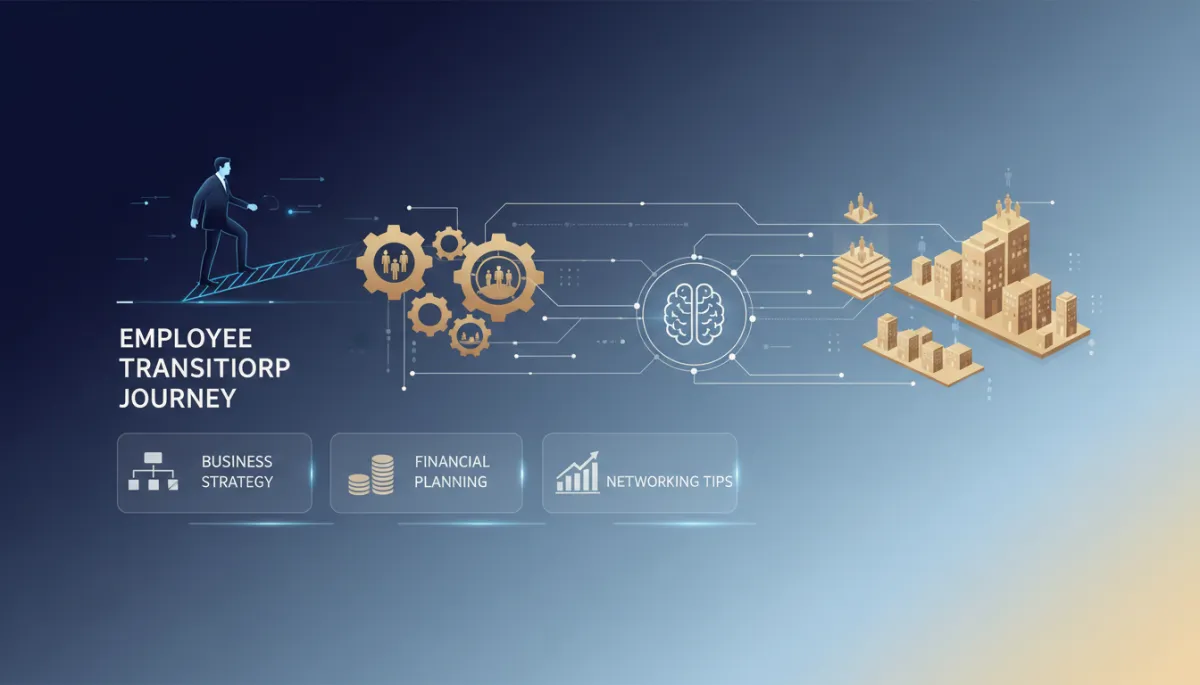
Guide: Nonprofit to Entrepreneur Transition
Nonprofits, Employee Transition, Entrepreneurship Journey
From Employee to Entrepreneur: A Strategic Guide for Nonprofit Professionals
Moving from employee to entrepreneur is a significant step for nonprofit and community-focused professionals. This transition demands more than passion for impact; it requires a clear business strategy, thoughtful financial planning, and a deliberate mindset shift to build a sustainable venture that continues serving communities effectively.
Rethinking the Employee Transition in Nonprofit and Community Work
For many nonprofit staff and community leaders, the employee transition into entrepreneurship begins with a desire for greater flexibility, innovation, or long-term impact. Yet, leaving the perceived security of a salaried role can feel risky. The key is to approach this move as a structured project rather than a leap of faith. Start by clarifying why you want to pursue an entrepreneurship journey and how your new venture will serve nonprofits, social enterprises, or community groups in a way your current role cannot.
Map your existing skills—grant writing, program design, stakeholder engagement, or advocacy—and identify how they translate into services or products that organizations will pay for. This early clarity lays the foundation for a realistic timeline, a measured exit plan, and a smoother shift from employee to entrepreneur.
Designing Your Entrepreneurship Journey with a Solid Business Strategy
A mission alone will not sustain a venture. A robust business strategy is essential, particularly when your clients are nonprofits and community organizations that often operate on tight budgets. Begin by defining a focused value proposition: what specific problem do you solve, for whom, and in what measurable way? For example, you might specialize in impact measurement, fundraising strategy, volunteer management systems, or capacity-building workshops tailored to small grassroots groups.
From there, outline your service packages, pricing models, and delivery methods. Consider retainer-based advisory, project-based consulting, training programs, or digital resources. The importance of developing a solid strategy cannot be overstated: it guides your marketing, informs your operations, and helps you say no to opportunities that dilute your focus or drain your capacity without fair compensation.

Clear strategy and financial projections help mission-driven ventures grow without losing focus.
Financial Planning: Understanding the Real Implications of Entrepreneurship
Passion for community impact must be matched with disciplined financial planning. Before resigning from your role, build a realistic budget that covers personal living expenses, healthcare, taxes, and initial business costs such as registration, software, and marketing. Understanding financial implications upfront allows you to set revenue targets and pricing that reflect the true cost of doing business, not just what feels comfortable to charge nonprofits.
Consider starting your entrepreneurship journey part-time, testing your offer and validating demand while still employed. Establish an emergency fund and forecast different revenue scenarios—optimistic, realistic, and conservative. This approach provides a financial safety net and reduces pressure, enabling better decision-making and more strategic client selection rather than accepting every opportunity out of urgency.
Networking Tips for the Nonprofit and Community Ecosystem
Strong relationships are central to success in nonprofit-focused entrepreneurship. Effective networking tips begin with viewing every interaction as an opportunity to understand needs, not just promote your services. Reconnect with former colleagues, board members, and partner organizations to share your new direction and ask how you can add value to their work. Attend sector conferences, local community meetings, and online forums where nonprofit leaders exchange ideas and challenges.
Offer pro bono insights strategically—perhaps a short diagnostic session or a workshop for a small group—instead of ongoing free work. This positions you as a trusted expert while reinforcing that your time and expertise have professional value. Intentional networking builds a referral-driven pipeline that is often more effective than broad advertising in the nonprofit space.
The Mindset Shift: Thinking Like an Entrepreneur, Not an Employee
One of the most challenging aspects of this transition is the required mindset shift. In an employee role, success is often tied to fulfilling assigned responsibilities within established structures. As an entrepreneur, you define the structure, manage risk, and make decisions with incomplete information. You must become comfortable with uncertainty while maintaining accountability to your mission and your clients.
Making a mental shift to succeed in entrepreneurship means viewing yourself as both impact leader and business owner. This includes setting boundaries, pricing confidently, and evaluating opportunities based on strategic fit, not just alignment with your values. When you embrace this dual identity, you can protect your wellbeing, sustain your venture financially, and continue serving nonprofits and communities with integrity over the long term.
📌 Key Takeaway: A successful shift from employee to entrepreneur in the nonprofit and community space rests on three pillars: a clear business strategy, rigorous financial planning, and an intentional mindset shift. When these elements align, your entrepreneurship journey can amplify your impact while creating a sustainable future for your work.
